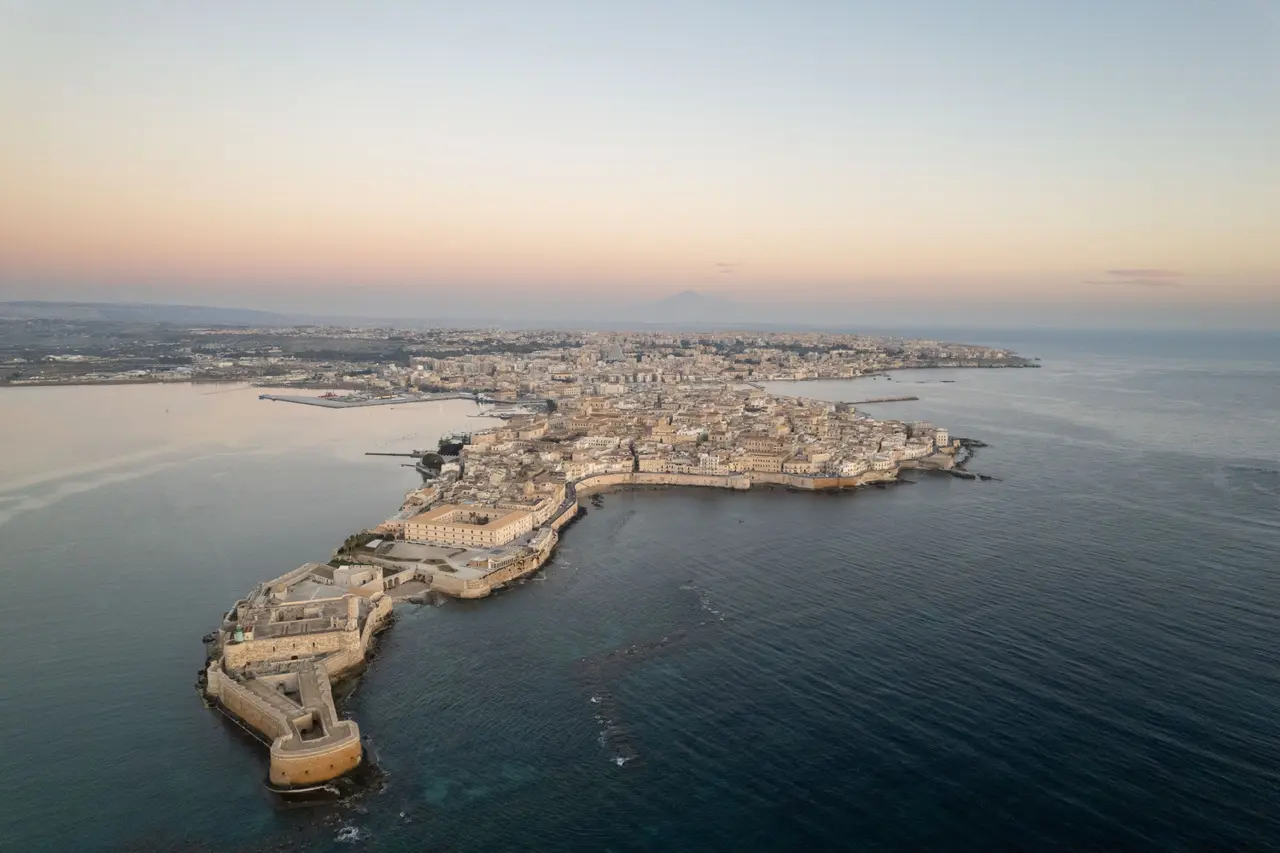
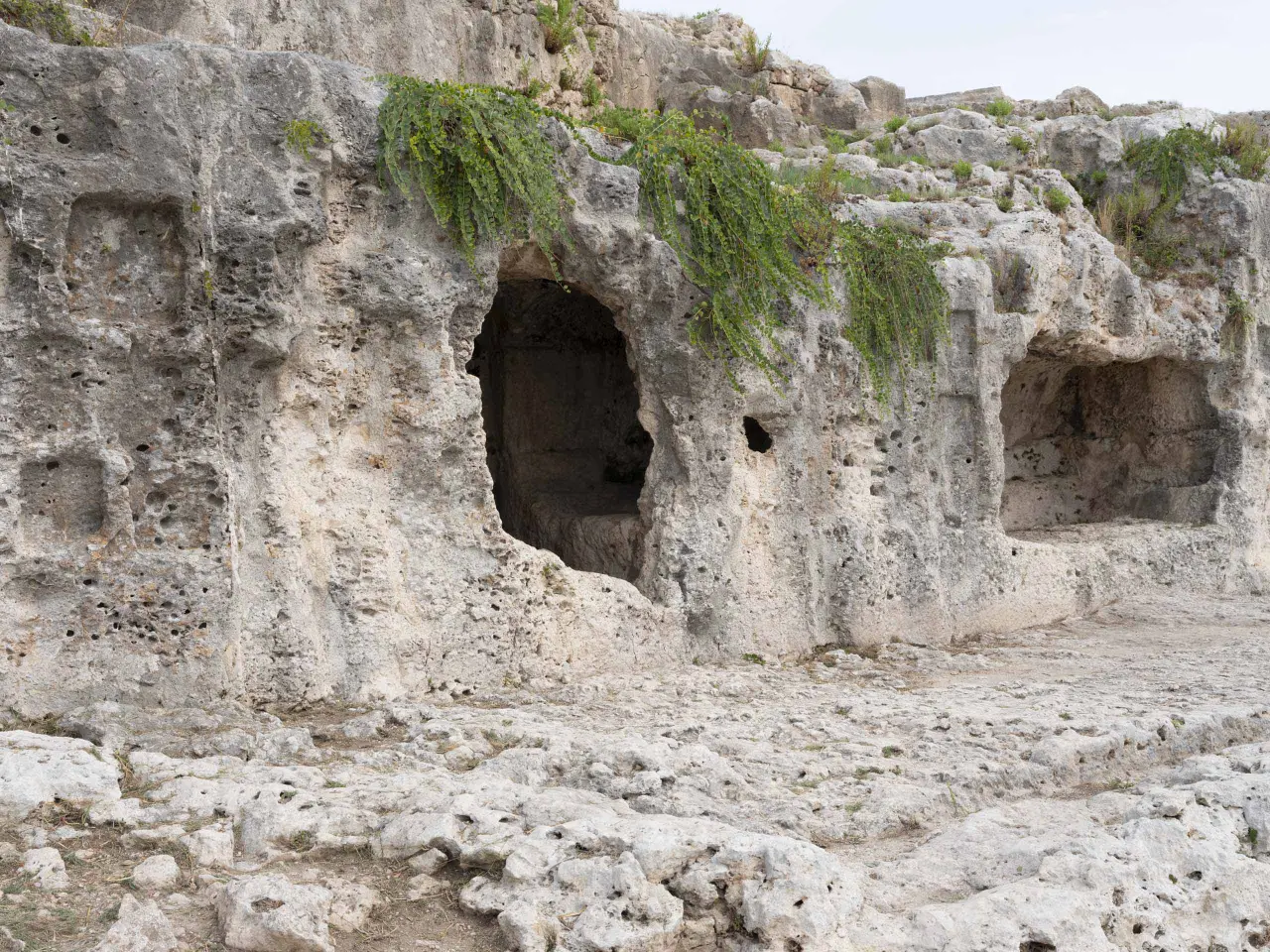



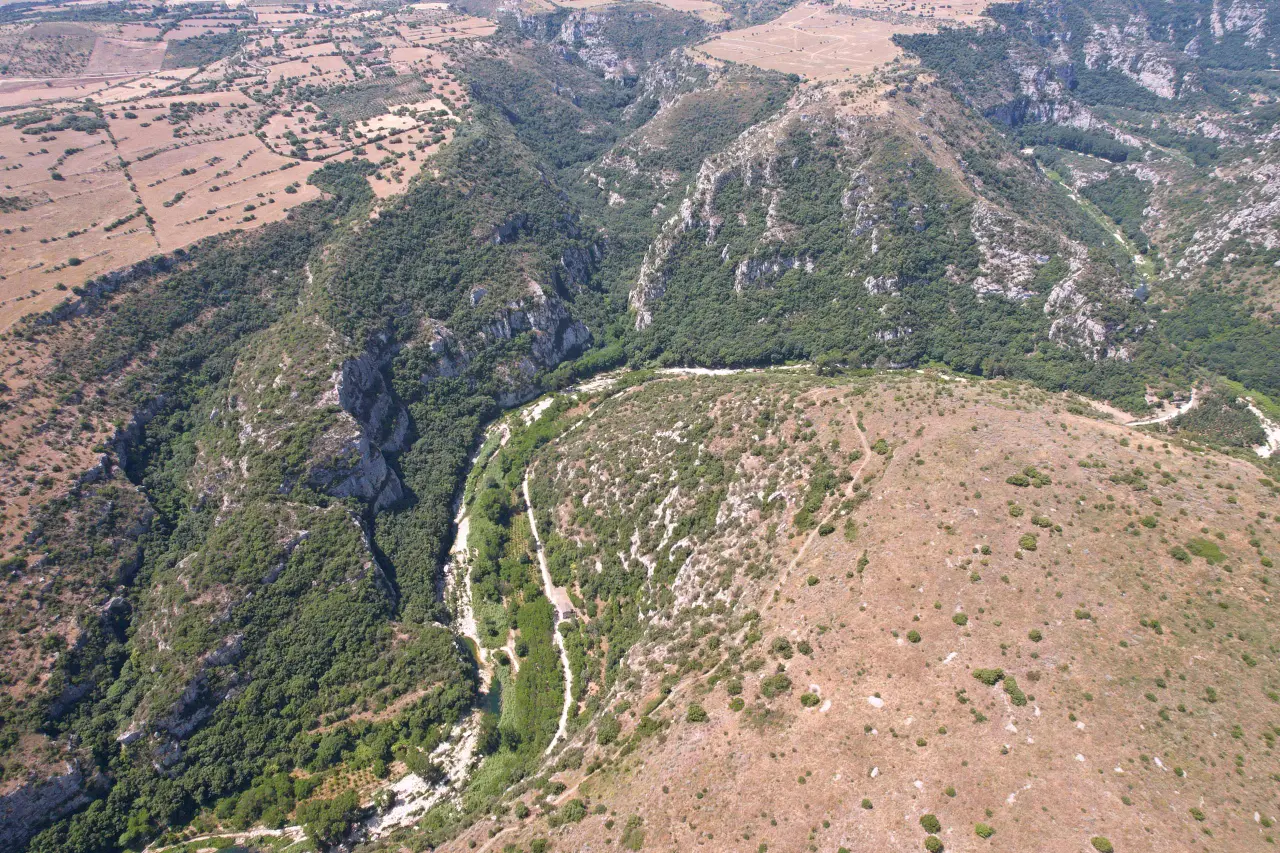
Pantalica, with its necropolises and vestiges of ancient settlements, would be impossible to explain without taking into account the landscape of the Anapo Valley. An area of great visual impact that offers a variety of types of excursions, it is worth exploring in multiple day trips. Following UNESCO’s joint recognition of Syracuse and the rocky necropolis of Pantalica as a World Heritage Site, the valley is an ideal link between the two sites.
First and foremost, an excursion crossing the Anapo Valley is an ideal way to explore the Pantalica Nature Reserve. The main path through the Reserve winds along the old Syracuse-Vizzini train route, built between 1905 and 1912 to connect inland towns with the coast. The railway line was shut down in the 1980s due to limited use and the high cost associated with its maintenance. The line includes tunnels cut through solid rock, and also has branches that lead to the five necropolises of Pantalica (see pp. 82-85) and the Anáktoron (see pp. 70-73), and thus now makes a wonderful hiking path that highlights the exceptional landscape. The train tracks closely follow the course of the Anapo River, offering breathtaking views of numerous rocky cliffs that host Pantalica’s archeological finds. An excursion through the valley is a perfect balance between nature and history.
Along the way, hikers can also follow the Calcinara creek up to the intake of the Galermi Aqueduct, a waterwork built under Gelon in 480 BC, after the battle of Himera, to carry water from the river to the city of Syracuse. This structure testifies to the ingenuity of the Greeks, masters at exploiting natural resources to create an advanced water supply system. The Galermi Aqueduct carries water from the Calcinara underground along the Anapo Valley to the Grotta del Ninfeo located in Syracuse’s Greek theater. This artificial cave, dedicated to mythical nymphs, served dual functions, as a sacred spot and a source for the ancient city’s water system.
The Anapo River is about fifty kilometers long, and its name may be derived from the Greek term Ἄναπος (Anapos), meaning “hidden river,” since several segments of the river flow underground through limestone, emerging in natural river caves. Today, the Anapo is still an important ecological element, hosting a wealth of flora and fauna typical of the Mediterranean area.


