The theme of the first edition of the COSMO Architecture Festival reflects on dialogue with the context, understood not as a simple backdrop but as an active material of the project. From December 28, 2025 to January 12, 2026, Syracuse and the territory of Pantalica become an open-air laboratory in which architecture, landscape, and community intertwine in a physical and conceptual journey across foundational sites of the Mediterranean.
COSMO invites architects, artists, and creatives to engage with the cultural, historical, and geographical identity of the territories they inhabit, recognizing context as an element capable of shaping and giving meaning to the work. In a stratified city like Syracuse and in an archaeological and natural landscape such as Pantalica, contemporary design is called not only to preserve, but also to interpret, activate, and render public spaces legible once again.
The first edition of the festival unfolds through three interventions that construct an ideal itinerary between Syracuse and Pantalica. In Ortigia, at the Belvedere della Turba, Swiss architect Leopold Banchini creates a temporary urban shelter that reflects on the theme of shelters as primary architectures—essential devices for relation, orientation, and sharing—capable of activating an urban space recently returned to the city.
The second intervention takes place in Sortino, in Piazza dei Cappuccini, where the studio FONDAMENTA proposes a temporary pavilion that reconstructs an urban perspectival axis and transforms a space currently dominated by automobiles into a place of encounter and possibility. An ephemeral architecture that suggests an alternative vision of public space as a collective stage and generator of social interaction.
The festival journey concludes in Pantalica, near the Anaktoron, with a performance conceived by artist and architect Didier Fiúza Faustino. The action reinterprets the theme of Sicilian processions in a contemporary key, bringing body, landscape, and primitive architecture into dialogue, and reactivating the original meaning of one of the most emblematic sites of the territory.
Through temporary installations and performances, COSMO proposes interventions that engage with the existing context, enhance heritage, and open new possibilities for use and perception of places. Context thus becomes a relational space, a field of forces in which history and the present meet, generating new narratives and forms of shared experience.
COSMO arises from this necessity: to rethink the role of temporary architecture as a critical and cultural tool, capable of triggering questions about the quality of the spaces we inhabit and about the relationship between the contemporary and memory, imagining a possible order in which design becomes an integral part of the territory and the community that lives it.
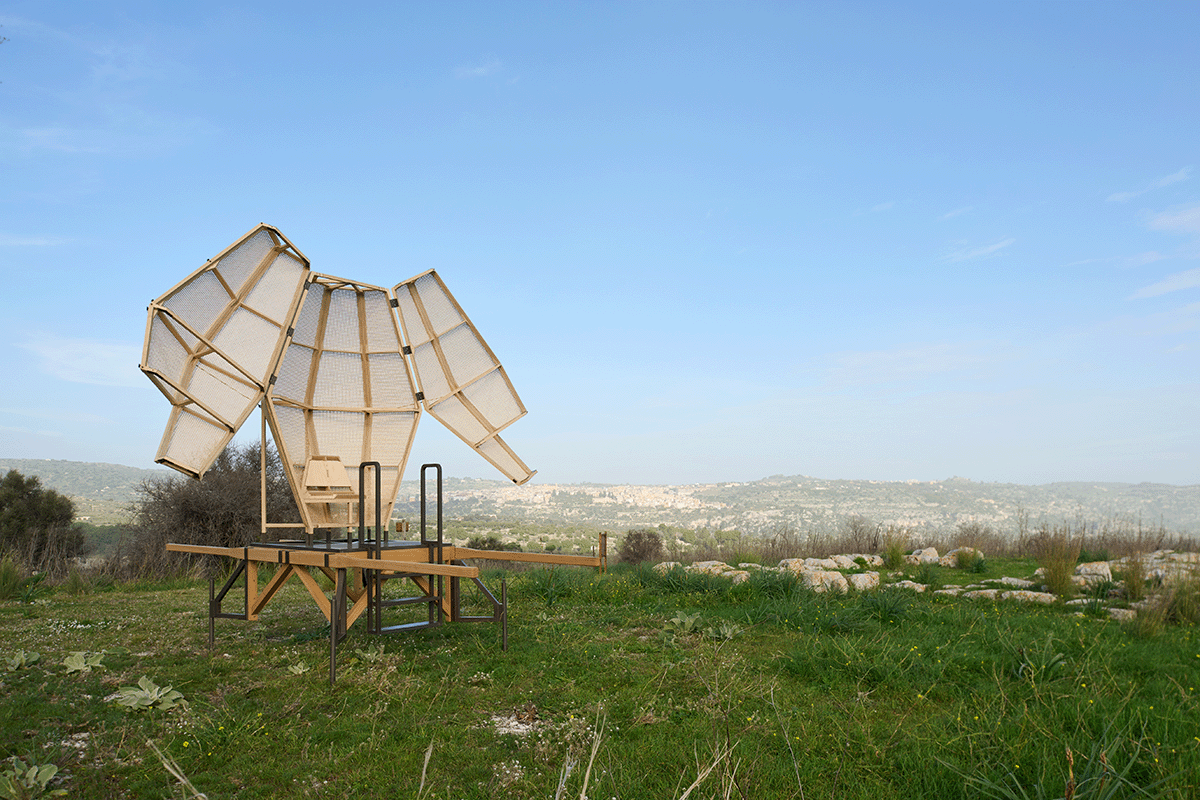
PERSONAL KINGDOM, Didier Fiúza Faustino.
Anaktoron di Pantalica
My house is a kingdom
without land, without subjects.
I travel with it at random
following time, seasons, insects.
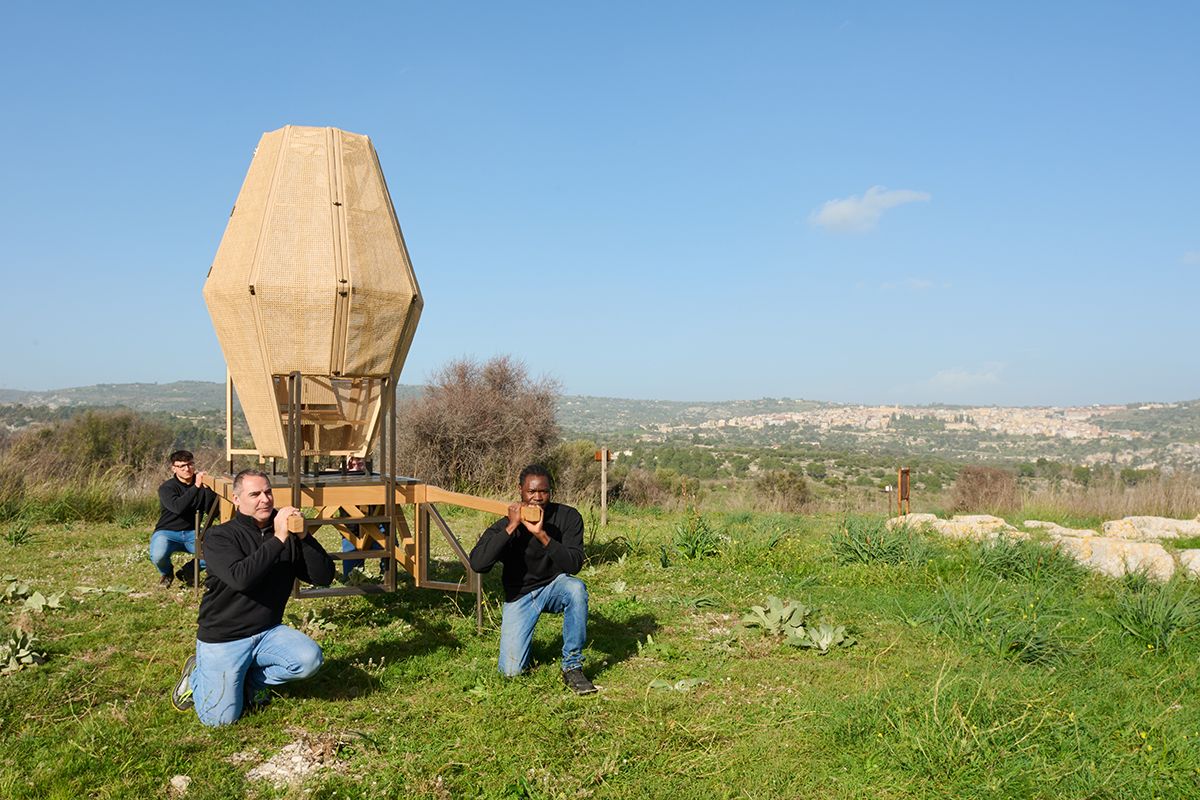
My kingdom is carried on the shoulders
of those who care altogether.
In turn we shift places
and try different paces.
Then from a new perspective
my kingdom becomes collective.
Personal Kingdom is a nomadic pavilion. It travels around the world in a procession and allows anyone to sit on its throne and momentarily embrace the landscape.
Name of the project: Personal Kingdom
Project: Didier Fiúza Faustino
Production: DiSe
25054, Fondamenta.
Piazza dei Cappuccini, Sortino
This intervention originates from a choice of place.
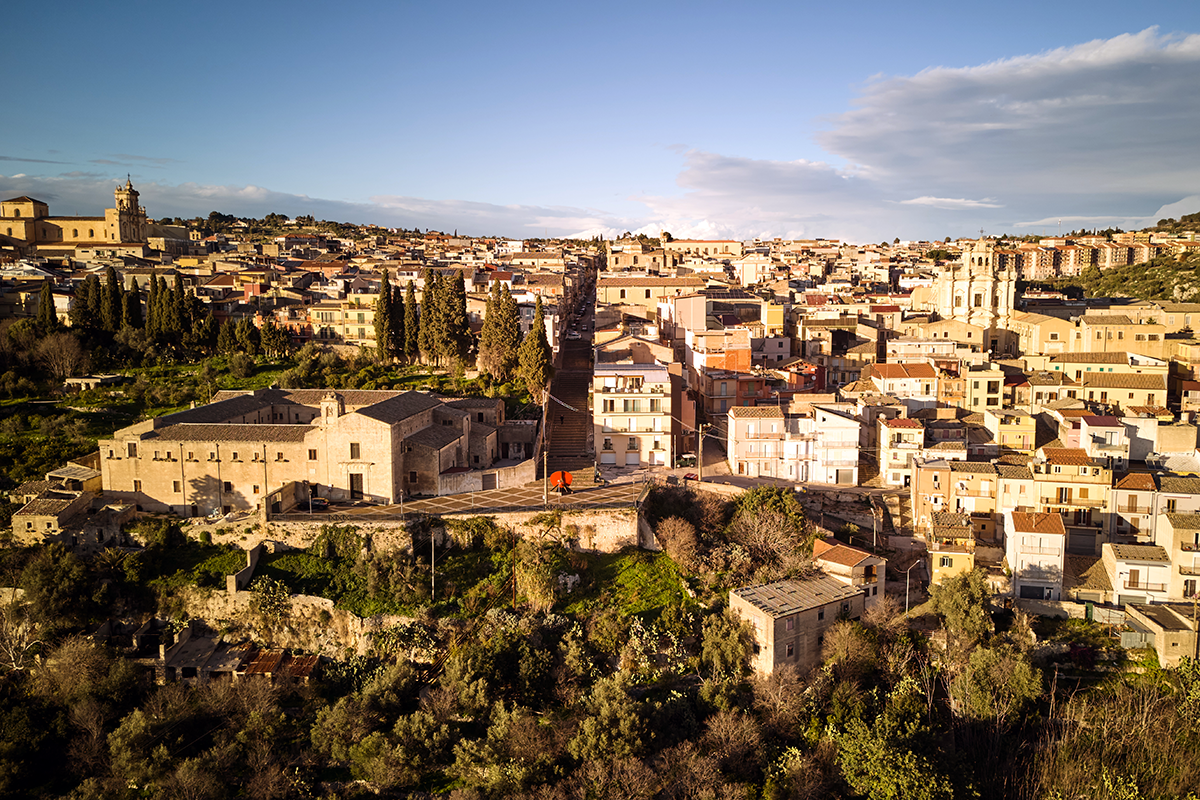
At the edge of Sortino, where one of the city’s principal axes dissolves into a residual stair, we identified a latent condition: a Baroque line once projecting outward, toward the valley and beyond. What today appears as a terminus once carried the potential of orientation and gathering. The projects intent is to reactivate this condition - not by restoring a lost form, but by inserting a device capable of reawakening spatial memory and collective use.
Breathing outward from the city, the staircase extends one of Sortino’s great axes toward the open edge. Here cardo and decumanus organize movement and sight. At the head of this axis the device stands, then gently turns by 5.7 degrees, aligning with the distant Anaktoron. This rotation is operative rather than symbolic: it binds the urban order to the depth of the landscape, marking the existance of a place that cannot be seen, only oriented toward. The device does not frame an image; it signals a direction, affirming presence through absence.
The place becomes stage and audience at once.
Acting as a quiet megaphone, the device amplifies voices while its cork skin absorbs echo, transforming projection into calm resonance. The body becomes orator, singer, storyteller - the urban void turns performative. What was descent becomes platea. The form of the device emerges from a dual necessity with conflicting ergonomic demands: to propagate sound and to orient gaze. A hybrid apparatus is born, whose geometry is the consequence of reconciling two irreducible actions: speaking and seeing.
Thus the belvedere becomes threshold and call.
The path continues toward Pantalica, through the necropolis and toward the Anaktoron itself, inviting entry without imposing it. And once there, turning back, the horizon may reveal a quiet gate - gently insisting on being found.
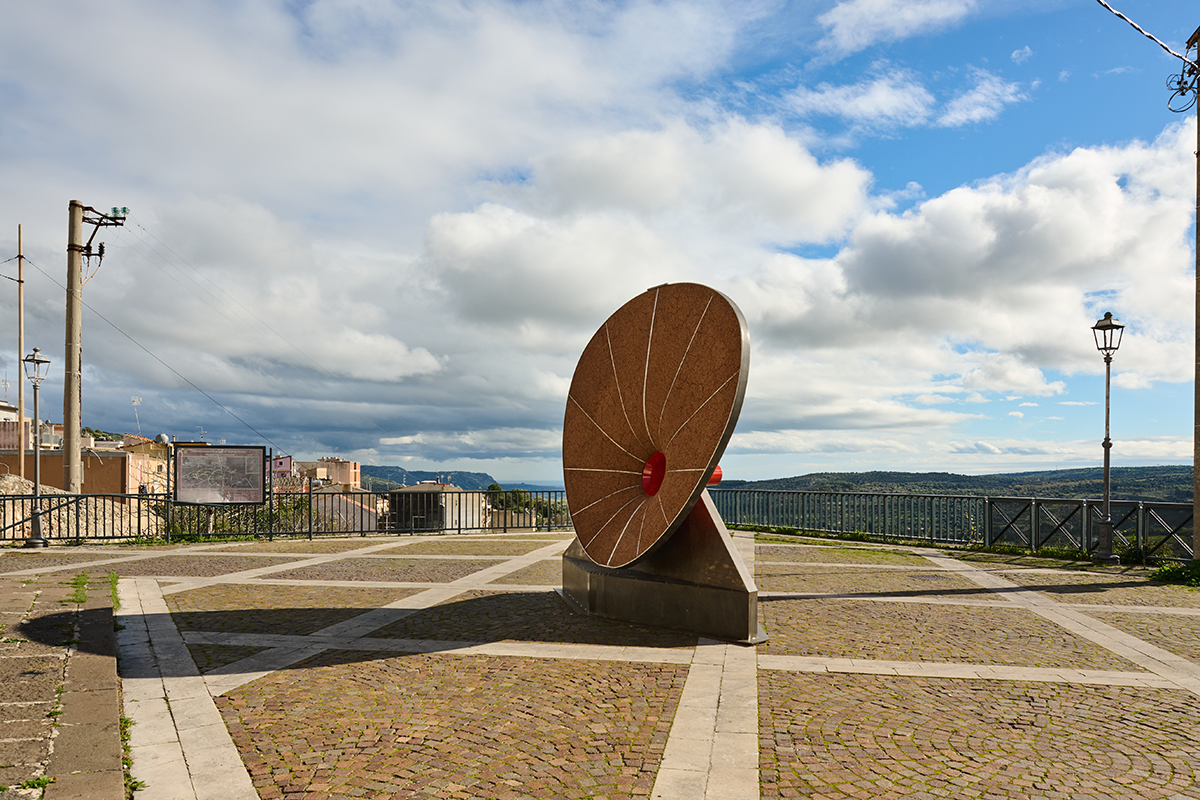
Name of the project: 25054
Project: Fondamenta
Production: DiSe
ASYMPTA, Leopold Banchini.
Belvedere della Turba, Siracusa
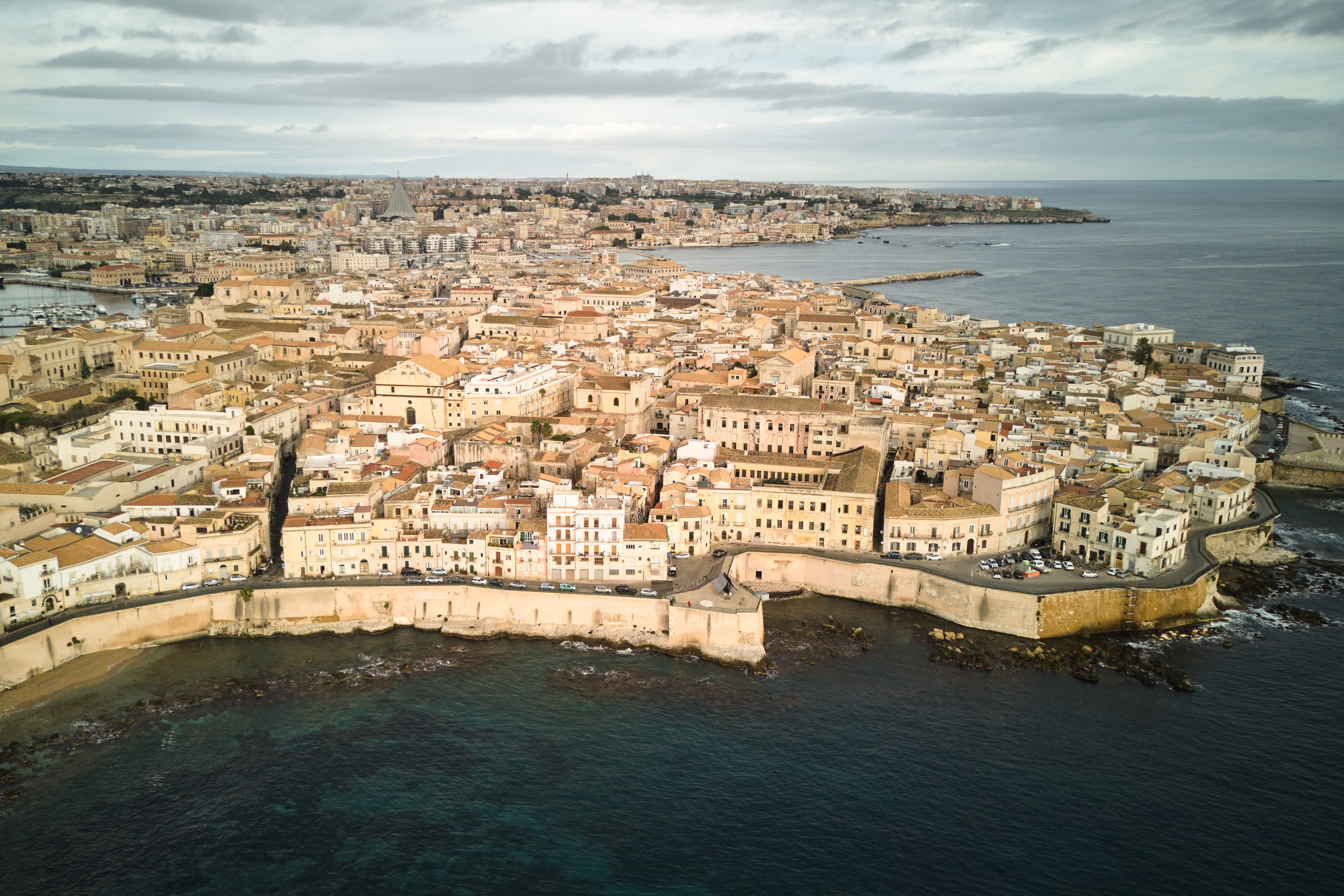
Little is known about the people who lived and buried their dead along the Anapo river. Pantalica, a complex of over 4000 thumbs carved in the rocks a millennium BC, doesn’t tell us much about the way the living found shelter. Since very few traces of commoners’ architecture has been found, we can only assume that the valley’s inhabitants used light construction technics and local organic materials to build their homes.
Part of the Syracusa-Pantalica UNESCO world heritage site listing, Asympta is a speculative micro architecture reflecting on the mostly unknown architectural landscape of the prehistoric civilisation rather than on its known necropolis. It explores how architectures and cosmologies might emerge from a specific landscape, attuned to its topography and resources. The temporary installation, echoing the provisional qualities of early domestic architecture, generates diverse and fictional narratives based on vernacular as much as on contemporary construction methods, purposefully distancing itself from archaeological or scientific theories.
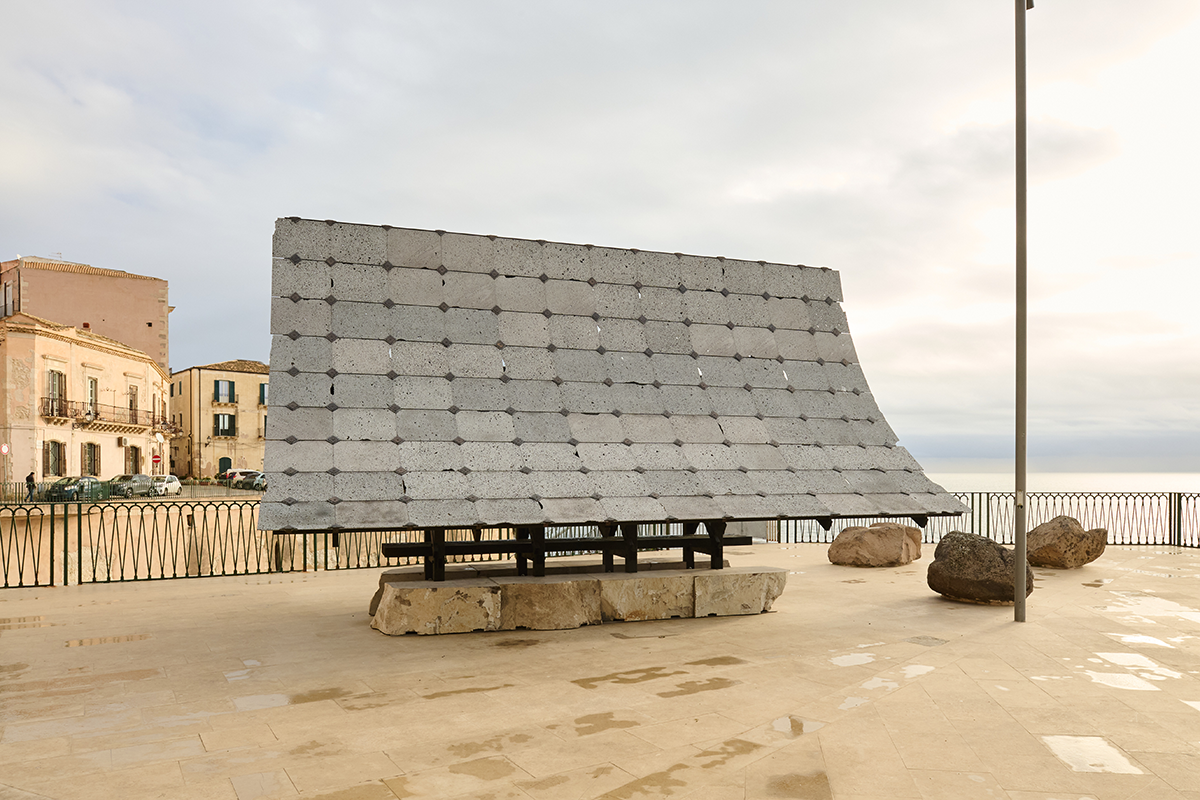
Using local wood sealed by fire, Pietra Pece limestone, lava stone from the nearby Etna volcano, bronze and sheep wool felt, the structure offers a shaded space for reunion and reflection. The double asymptotic shape echoes both the cone of the volcano dominating the landscape of eastern Sicily and the excavation shape of the nearby latomie. The open structure speaks of proximity, adaptability and reciprocity towards this rich landscape while purposefully questioning the romanticised myth of Laugier’s Primitive Hut.
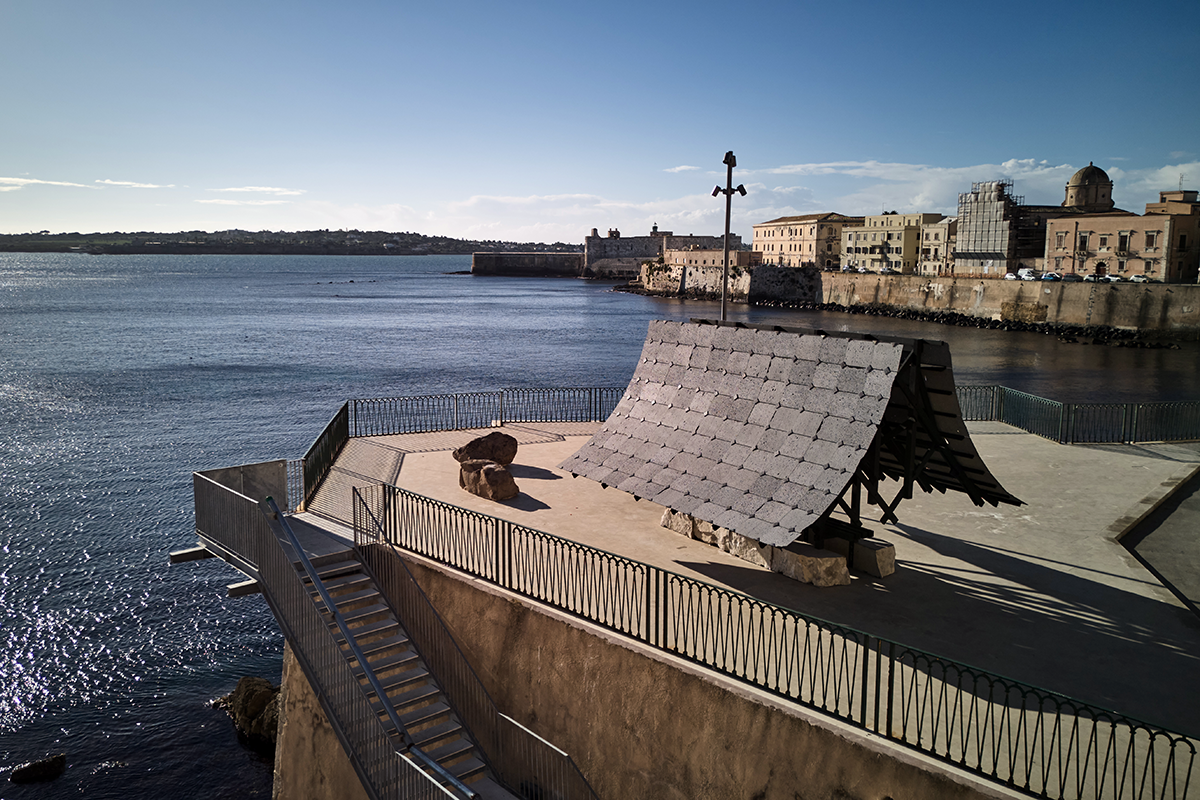
Name of the project: Asympta
Project: Leopold Banchini
Production: DiSe