

Dionysius I was the orchestrator of this imposing defensive structure, completed in just six years (402-397 BC) and surely accelerated by the impending threat of the Carthaginians, who had already reconquered Himera (409 BC) and taken Agrigento (406 BC). The military presidio was built to guard against possible attacks from inland, and it was located at the juncture of pre-existing city walls. In the early 20th century, Orsi’s archeological discoveries illuminated the castle’s structure and stratifications, with a keep, three ditches/moats and an underground access, still visible today.
The large rectangular structure with well-conserved walls at the center of the architectural complex is the oldest part, although it was altered in the Byzantine era. In the castle’s original layout, this building was directly linked to the first bastion we see upon entering, of which only a prow-shaped buttress remains today. Among the archeological finds from this area of the fortification, which was demolished at a certain point, a lion’s head gutter spout is particularly interesting. In fact, militarily innovative elements of the castle included four square corner towers, which must have had gutters with spouts and crenellations, as well as defenses strengthened with the construction of new barrier walls and, most importantly, the three ditches/moats. These defensive works were added to make the castle less vulnerable to frontal attacks with siege machinery in a spot where the land was flat. The towers, on the other hand, are thought to have been intended to host catapults. The overall result is a complex with a magnificent system of internal galleries, accessible by means of the third moat, which would have allowed troops to move to new positions inside the castle during a siege without being seen by the enemy. These specific transformations of the complex have been associated with ancient-era refinements of military tactics. There must have been quarters or garrison areas capable of hosting troops for lengthy periods. On the north side of the castle, a monumental pincer gate opened to allow access to the city; today it lets visitors observe a well-conserved section of Greek city walls.
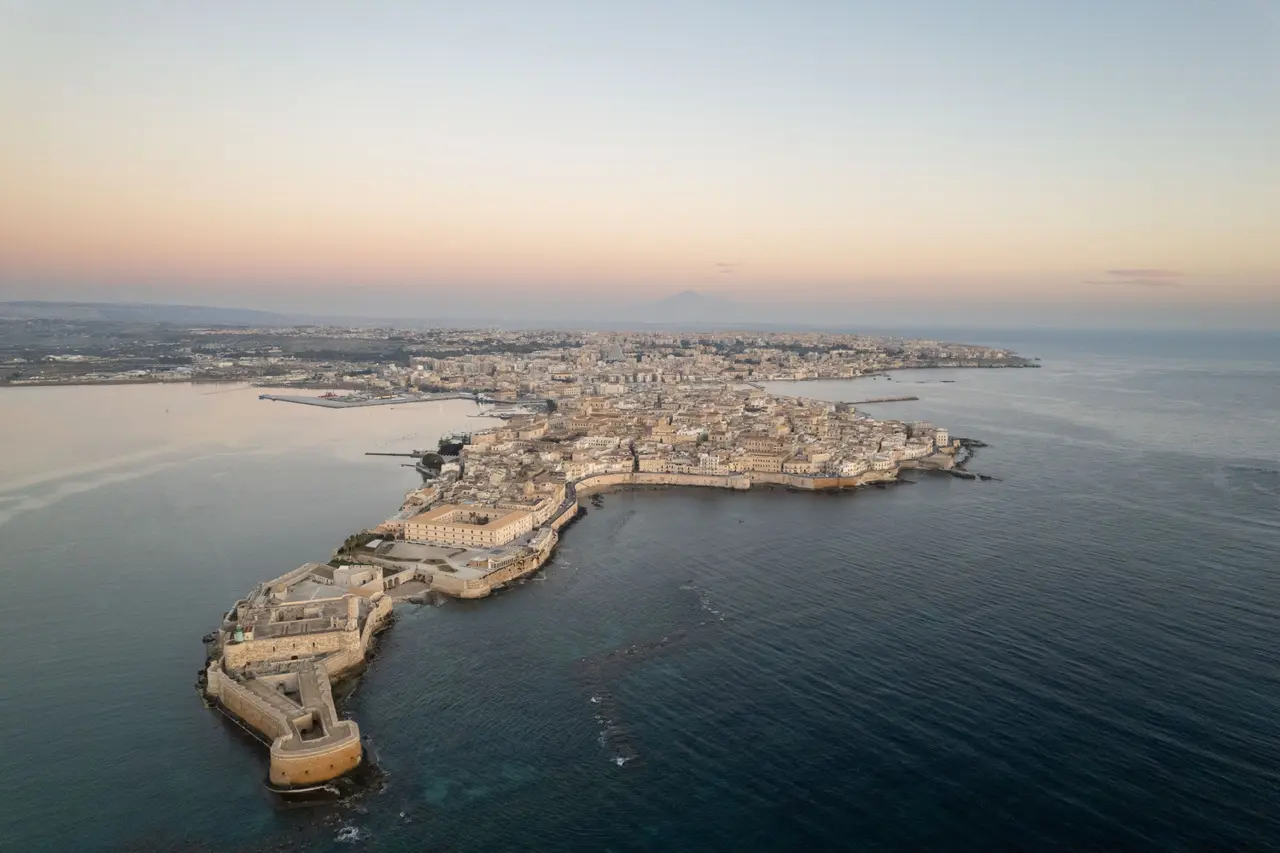
Between the 18th and 19th centuries, as interest in painting and drawing landscapes grew among artists who thus sought appealing subjects, the castle became a favorite spot from which to depict the city from above, offering a magnificent panorama looking out towards Ortygia.